Solar panels represent a significant investment for any homeowner. Yet many Everett residents unknowingly lose hundreds of dollars each year because dirt, moss, and Pacific Northwest grime reduce their panels’ efficiency by 15% to 35%. Understanding the solar panel cleaning cost and the return on that investment helps you make informed decisions about maintaining your solar energy system.
This guide breaks down exactly what professional solar panel cleaning costs in the Everett area, how much energy production you stand to recover, and when the service pays for itself. You’ll also learn about DIY risks, recommended cleaning schedules, and how to choose the right cleaning method for your home.
What Affects Solar Panel Cleaning Cost in Everett
Several factors determine how much you’ll pay to have your solar panels professionally cleaned. The size of your solar array matters most. A typical residential installation in Everett ranges from 20 to 40 panels, and most companies price per panel or by system size.
Roof pitch and height also influence pricing. Steep roofs or multi-story homes require additional safety equipment and time, which increases labor costs. Panels installed on difficult-to-access rooflines or over landscaping that complicates ladder placement will cost more to service.
The level of buildup affects both the time required and the cleaning method needed. Panels with light dust require simple rinsing, while those covered in moss, bird droppings, or tree sap demand more intensive treatment. Homes near construction sites, agricultural areas, or busy roads accumulate more debris and may need more frequent service.
Most professional services in the Everett area charge between $8 and $20 per panel for standard residential cleaning. A typical 30-panel system costs $240 to $600 per cleaning, with most homeowners paying around $350 to $400 for a thorough job.
How Dirty Solar Panels Impact Energy Production
Solar panels generate electricity when sunlight hits photovoltaic cells. Any obstruction between the sun and those cells reduces output. Even a thin layer of dust can decrease efficiency by 5% to 10%. Heavier accumulation of pollen, leaves, bird droppings, and moss can cut production by 20% to 35%.
The Pacific Northwest climate creates ideal conditions for efficiency loss. Everett receives substantial rain, but not enough to rinse away sticky tree sap, pollen, and moss spores. Long stretches of drizzle leave residue that dries into a film. Homes near Puget Sound face salt spray, while those near wooded areas deal with constant organic debris.
A 2019 study by the National Renewable Energy Laboratory found that panels in moderate-soiling environments lost 7% efficiency after eight months without cleaning. In high-soiling areas, losses reached 25% in the same period. Everett’s tree canopy and marine climate place most homes in the moderate to high category.
For a typical 6-kilowatt system producing $1,200 worth of electricity annually, a 20% efficiency loss means $240 in lost production each year. That number grows if electricity rates increase or if your system remains dirty for multiple years.
Calculating Your Solar Panel Cleaning ROI
Return on investment for solar panel cleaning depends on three numbers: your system’s output value, the percentage of efficiency you’ve lost to soiling, and the solar panel cleaning cost you’ll pay to restore that efficiency.
Start by checking your solar monitoring system to see if production has declined compared to previous months or years. A drop of 15% to 25% from historical averages often indicates cleaning is overdue. Multiply your annual energy production value by the percentage lost to calculate your annual cost of dirty panels.
If your system generates $1,500 worth of electricity yearly and efficiency has dropped 20% due to soiling, you’re losing $300 per year. A professional cleaning costing $400 pays for itself in 16 months. If you clean annually, you’ll recover the remaining eight months of lost production, netting $100 in the first year and $300 in subsequent years.
Most Everett homeowners find that annual or bi-annual cleaning delivers positive ROI within one to two years, especially for systems in high-soiling locations. Homes under heavy tree cover or near agricultural areas may benefit from quarterly service.
Pro Tip: Check your solar production before and after cleaning to measure actual efficiency gains. Many homeowners see 15% to 30% output increases immediately following professional service.
Professional vs DIY Solar Panel Cleaning
Some homeowners consider cleaning panels themselves to reduce costs. While DIY cleaning is possible for ground-level or easily accessible arrays, it carries significant risks that often outweigh the savings.
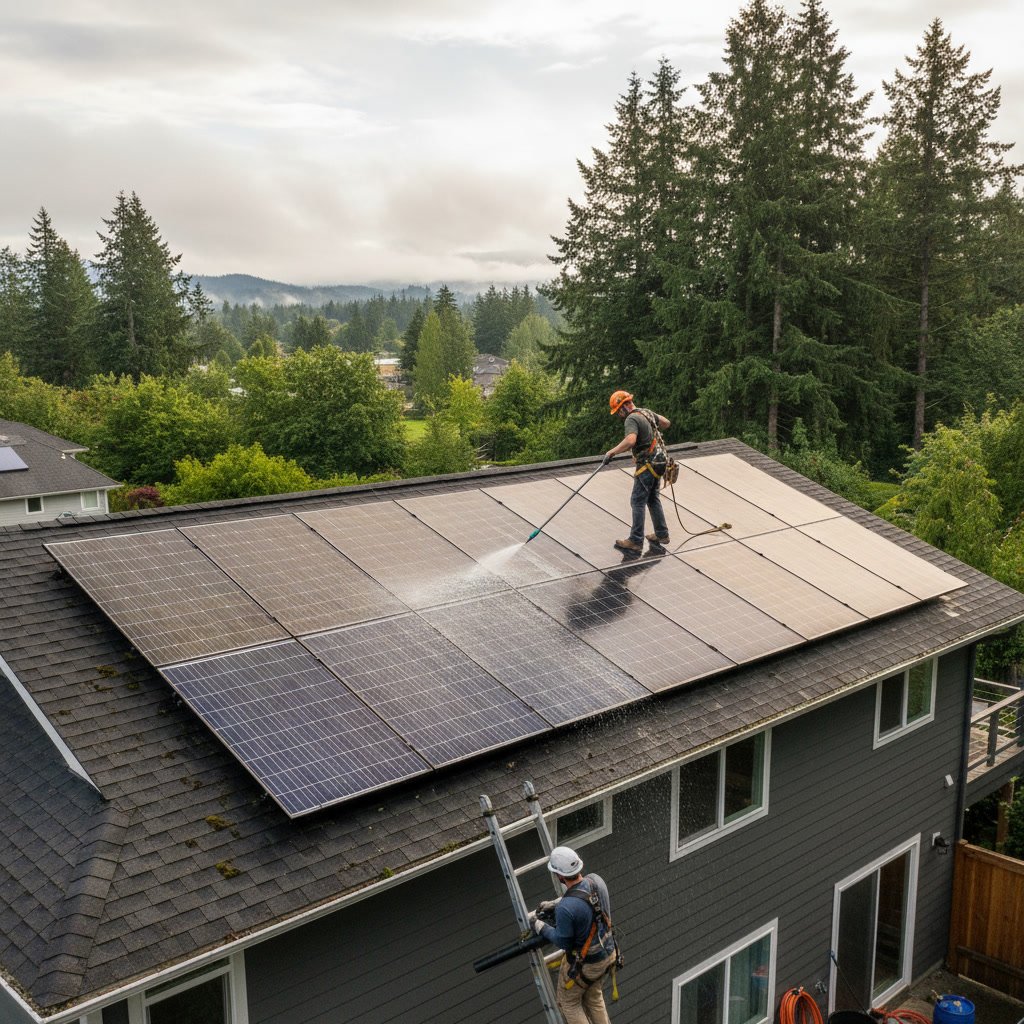
Roof safety presents the primary concern. Falls from ladders and roofs cause thousands of injuries annually. Professional cleaning companies carry liability insurance and use proper fall protection equipment. They also understand roof navigation to avoid damaging shingles or flashing.
The wrong cleaning method or product can permanently damage solar panels. Abrasive brushes scratch protective glass coatings. Pressure washers used incorrectly can crack cells or force water into electrical connections. Harsh chemicals void warranties and degrade panel surfaces over time.
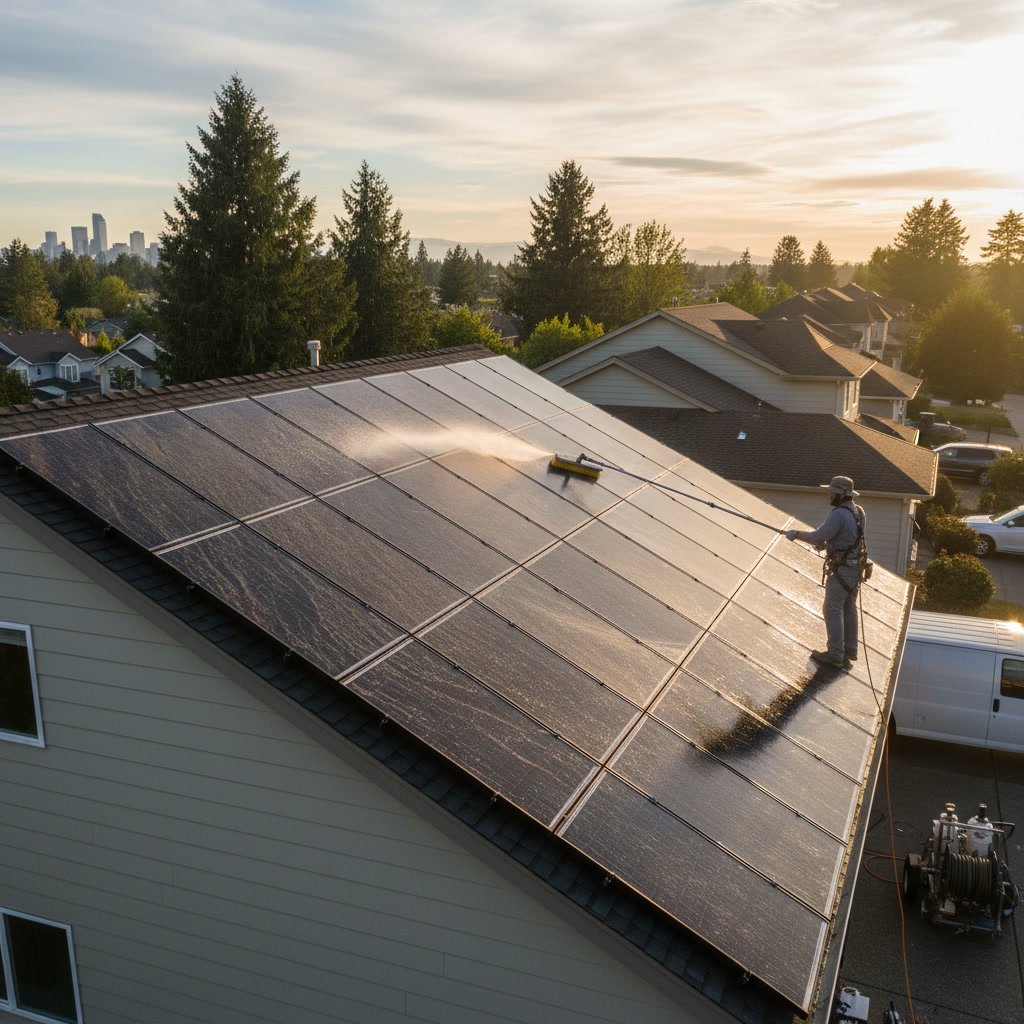
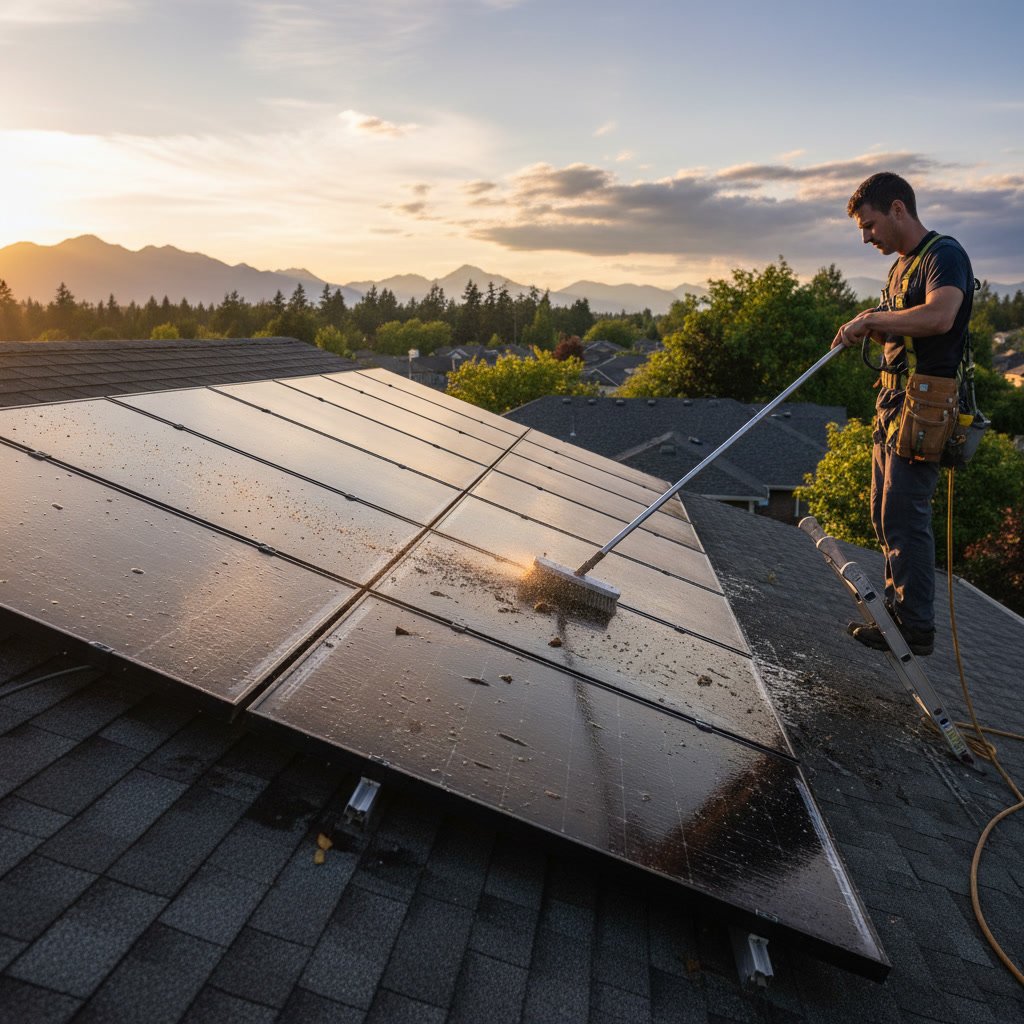
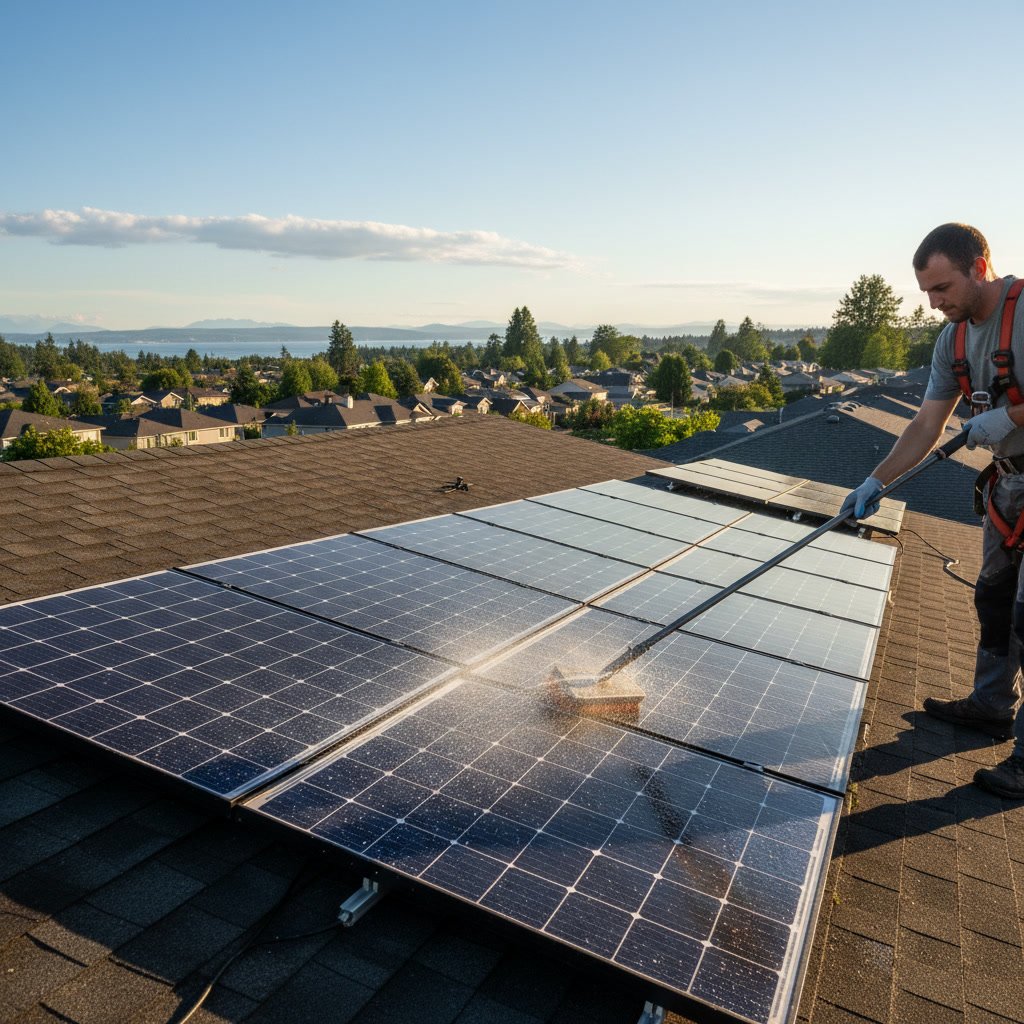
Professional services use deionized water systems that prevent mineral deposits and spotting. They employ soft washing techniques that safely remove buildup without high pressure. Trained technicians also inspect for damage, loose mounting hardware, and potential electrical issues during each visit.
The time investment for DIY cleaning adds hidden costs. Most homeowners spend three to five hours on setup, cleaning, and equipment breakdown. Professional teams complete the same work in 60 to 90 minutes.
When to Schedule Solar Panel Cleaning
Optimal cleaning frequency depends on your specific location and environmental conditions. Most Everett homes benefit from service twice per year, typically in spring and fall.
Spring cleaning removes winter accumulation of moss, algae, and organic debris. Pollen season in the Pacific Northwest peaks from March through May, coating panels in sticky yellow film. An early summer cleaning maximizes output during the longest, sunniest days of the year.
Fall service prepares panels for winter by removing leaf litter, bird droppings, and summer dust before the rainy season. Clean panels entering winter maintain better efficiency during months when sunlight hours are already limited.
Homes in heavily wooded areas or under deciduous trees may need quarterly service. Properties near construction, agriculture, or industrial activity accumulate airborne particles faster. Coastal locations dealing with salt spray benefit from more frequent maintenance.
Monitor your solar production data regularly. A sudden drop of 15% or more compared to the same period in previous years often signals that cleaning is overdue. Visual inspection helps too. If you can see visible buildup from the ground, your panels definitely need attention.
Soft Washing vs Pressure Washing for Solar Panels
The cleaning method matters as much as the frequency. High-pressure washing can damage solar panels by cracking photovoltaic cells, stripping anti-reflective coatings, or forcing water into electrical connections. Most manufacturers void warranties if panels are cleaned with pressure exceeding 40 PSI.
Soft washing uses low-pressure water combined with biodegradable cleaning solutions to safely remove buildup. This method protects delicate panel surfaces while effectively eliminating moss, algae, bird droppings, and tree sap. The process typically includes a pure water rinse that prevents mineral spots and streaking.
Professional solar panel cleaning services use deionized or reverse-osmosis filtered water systems. These remove minerals that cause spotting and reduce light transmission. Standard tap water leaves calcium and magnesium deposits that accumulate over time and reduce efficiency.
For homeowners interested in learning more about cleaning method differences, our guide comparing soft washing vs pressure washing for home exteriors explains how each technique works and when to use them.
Additional Benefits of Professional Solar Panel Maintenance
Beyond immediate energy production gains, regular professional cleaning extends panel lifespan and protects your investment. Solar panels typically carry 25-year warranties, but neglected maintenance accelerates degradation.
Organic buildup like moss and algae holds moisture against panel surfaces, promoting corrosion of frames and mounting hardware. Bird droppings contain acids that etch glass over time. Tree sap bakes onto surfaces in summer heat, creating permanent stains that reduce light transmission.
Professional technicians inspect your system during each cleaning visit. They identify loose mounting bolts, damaged wiring, cracked panels, and potential safety hazards. Early detection of these issues prevents costly repairs and maintains warranty coverage.
Clean panels also maintain your home’s curb appeal. Dirty, streaked solar arrays detract from property value and suggest poor maintenance. If you’re planning to sell, clean panels demonstrate that major home systems receive proper care.
Many homeowners bundle solar panel cleaning with other exterior maintenance services. Companies that offer comprehensive exterior cleaning services can clean panels, windows, gutters, and roofs in a single visit, reducing per-service costs and scheduling hassle.
Choosing a Solar Panel Cleaning Service in Everett
Not all cleaning companies understand solar panel requirements. When selecting a service provider, verify they use soft washing methods specifically designed for photovoltaic systems. Ask about their water filtration equipment and confirm they avoid high-pressure washing.
Insurance and safety certifications matter. The company should carry liability insurance and workers’ compensation coverage. Technicians should use proper fall protection equipment and follow OSHA safety protocols for roof work.
Experience with solar systems is essential. Companies that primarily offer pressure washing for driveways and decks may not understand the delicate nature of solar panels. Look for providers who list solar panel cleaning as a core service and can provide references from satisfied customers.
Request a detailed quote that specifies the number of panels, cleaning method, and any additional inspection services included. Avoid companies that provide phone estimates without seeing your installation. Roof pitch, array size, and access challenges all affect accurate pricing.
Local companies familiar with Pacific Northwest conditions understand regional challenges like moss growth, tree debris, and salt spray. They can recommend appropriate cleaning schedules based on your specific location and environment.
Frequently Asked Questions
How often should solar panels be cleaned in Everett?
Most Everett homeowners benefit from professional cleaning twice per year, typically in spring and fall. Homes under heavy tree cover or in high-debris areas may need quarterly service. Monitor your energy production data and schedule cleaning when output drops 15% or more compared to historical averages.
Does rain clean solar panels effectively?
Rain removes loose dust but doesn’t eliminate sticky substances like tree sap, pollen, bird droppings, and moss. Everett’s frequent drizzle often leaves residue that dries into an efficiency-reducing film. Professional cleaning with filtered water and appropriate solutions is necessary for optimal performance.
Will cleaning solar panels void my warranty?
Professional soft washing does not void warranties when performed correctly. However, high-pressure washing, abrasive cleaning tools, or harsh chemicals can void coverage. Always hire experienced technicians who follow manufacturer guidelines and use approved methods.
Can I use a regular garden hose to clean my panels?
Garden hoses work for light dust removal but tap water contains minerals that leave spots and reduce light transmission. Professional services use deionized or reverse-osmosis filtered water that prevents mineral buildup. Additionally, accessing roof-mounted panels safely requires proper equipment and training.
How much energy production will I recover after cleaning?
Most homeowners see 15% to 30% production increases immediately after professional cleaning, depending on the level of buildup. Heavily soiled panels can recover up to 35% efficiency. Check your solar monitoring system before and after service to measure actual gains for your specific installation.
Protecting Your Solar Investment
Understanding solar panel cleaning cost and ROI empowers you to make smart maintenance decisions. Regular professional cleaning typically pays for itself within one to two years through increased energy production, while also extending panel lifespan and protecting your warranty.
For Everett homeowners, twice-yearly service provides optimal results in most cases, with adjustments based on your property’s specific environmental challenges. The investment in professional maintenance far outweighs the cost of lost energy production and potential panel damage from neglect.
Resilience Exterior Cleaning provides professional solar panel cleaning throughout Everett and surrounding communities. Our trained technicians use safe soft washing methods with filtered water systems to restore your panels to peak efficiency without risking damage. We serve homeowners across the Pacific Northwest, including Lynnwood, Marysville, and Lake Stevens. Contact us at 4254719386 to schedule an inspection and receive a detailed quote for your solar panel cleaning needs.